
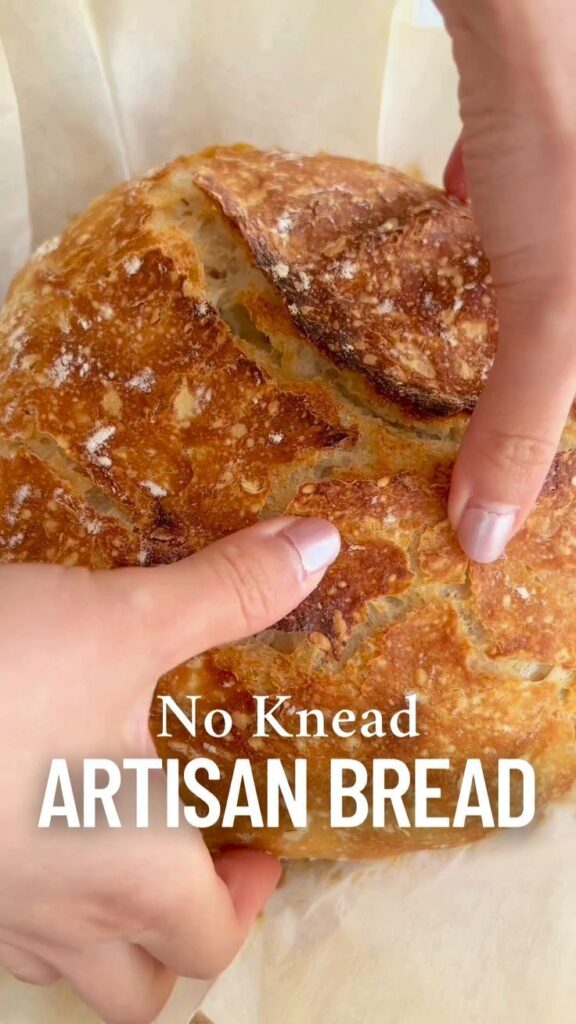
Welcome to the world of no-knead artisan bread. This recipe strips away the intimidation of traditional bread baking, leaving you with a stunning, bakery-quality loaf that requires just 5 minutes of active effort. The magic lies in a long, slow fermentation that builds flavor and structure without any strenuous kneading.
Advertisements1
You'll use a Dutch oven to trap steam, creating that coveted crispy crust and airy, open crumb. The process is forgiving, so even if your schedule is chaotic, you can fit this in. Mix the dough one evening, bake it the next, and enjoy the most rewarding slice of bread you've ever made.
By the end of this guide, you'll have a foolproof method and the confidence to experiment with flours and add-ins. Let's demystify bread baking together.
Why You'll Love This Recipe
About the Ingredients
3 cups (390g) bread flour
Bread flour has higher protein for better gluten development. Substitute all-purpose flour; the crumb will be slightly less chewy.
1 1/2 teaspoons (5g) instant yeast
Instant yeast dissolves quickly without proofing. If using active dry, dissolve in the water first and increase by 25%.
1 1/2 teaspoons (9g) fine sea salt
Use fine salt for even distribution. Table salt can be used but reduce to 1 teaspoon.
1 1/2 cups (355ml) lukewarm water (about 105°F/40°C)
Water temperature matters: too hot kills yeast, too cold slows fermentation. Use a thermometer for accuracy.
Tips & Tricks
- Use a kitchen scale for precise measurements; volume measurements can vary.
- Don't skip the resting time; it's essential for flavor and structure.
- Let the dough come to room temperature before baking if it was refrigerated overnight.
Pro Tips
Step-by-Step Instructions
1. Mix the dough
In a large bowl, whisk together flour, yeast, and salt. Add lukewarm water and stir with a wooden spoon until a shaggy dough forms and no dry flour remains. Cover the bowl with plastic wrap or a damp towel.
2. First fermentation
Let the dough rest at room temperature (about 70°F/21°C) for 12-18 hours. The dough is ready when it's dotted with bubbles and has doubled in size. This slow fermentation develops deep flavor.
3. Shape the dough
Turn the dough out onto a heavily floured surface. It will be sticky; use a bench scraper to fold it over itself a few times to form a rough ball. Place it seam-side down on a piece of parchment paper.
4. Second rise
Cover the dough with the damp towel and let it rise for 1-2 hours, until it's puffy and nearly doubled. Meanwhile, place your Dutch oven in the oven and preheat to 450°F (230°C) for at least 30 minutes.
5. Score the dough
Just before baking, use a sharp knife or lame to score the top of the dough with a few slashes. This allows steam to escape and controls where the bread expands.
6. Bake covered
Carefully remove the hot Dutch oven from the oven. Using the parchment paper, lift the dough and lower it into the pot. Cover with the lid and bake at 450°F (230°C) for 30 minutes.
7. Bake uncovered
Remove the lid and continue baking for 15-20 minutes, until the crust is deep golden brown and the internal temperature reaches 205-210°F (96-99°C) on an instant-read thermometer.
8. Cool completely
Transfer the bread to a wire rack and let it cool for at least 1 hour before slicing. This allows the crumb to set; cutting too early will result in a gummy texture.
Delicious Variations
- Add 1 cup of shredded cheddar and 1/2 cup of chopped jalapeños to the dough before the first rise for a savory twist.
- Substitute 1 cup of whole wheat flour for 1 cup of bread flour and add 1 tablespoon of honey for a heartier loaf.
- Mix in 1/2 cup of dried rosemary and 1/4 cup of olive oil for a fragrant herb focaccia-style bread.
How to Store Yeast Artisan Bread
Refrigerator
Store in a paper bag or wrapped in a clean kitchen towel at room temperature for up to 3 days. Do not refrigerate, as it will dry out.
Freezer
Wrap the completely cooled loaf tightly in plastic wrap and then aluminum foil. Freeze for up to 3 months. Thaw at room temperature for 2-3 hours.
Reheating
To revive the crust, place slices in a toaster or the bread whole in a 350°F (175°C) oven for 5-10 minutes.
Frequently Asked Questions
Q: Why is my bread dough so sticky?
A sticky dough is normal for this high-hydration recipe. Use floured hands and a bench scraper to handle it. If it's unmanageable, add a little more flour, but resist over-flouring, which will make the bread dense.
Q: Can I use all-purpose flour instead of bread flour?
Yes, all-purpose flour works, but the bread will have a slightly softer crumb and less chew. Increase the water by 2 tablespoons to compensate for the lower protein content.
Q: Do I need a Dutch oven?
A Dutch oven is ideal because it traps steam, creating a crispy crust. Without one, you can place a baking dish filled with water on the lower rack to create steam, but the crust won't be as dramatic.
Q: Can I refrigerate the dough after mixing?
Absolutely. After the first rise, you can refrigerate the dough for up to 3 days. Just bring it to room temperature for 1-2 hours before shaping and baking.
Q: How do I know when the bread is done?
The bread is done when the crust is deep golden brown, the bottom sounds hollow when tapped, and the internal temperature registers 205-210°F (96-99°C) on an instant-read thermometer.
Now that you've mastered this no-knead artisan bread, try adding your own twist with herbs, cheeses, or seeds. Share your baking triumphs in the comments below, and don't forget to subscribe for more foolproof recipes. Happy baking!
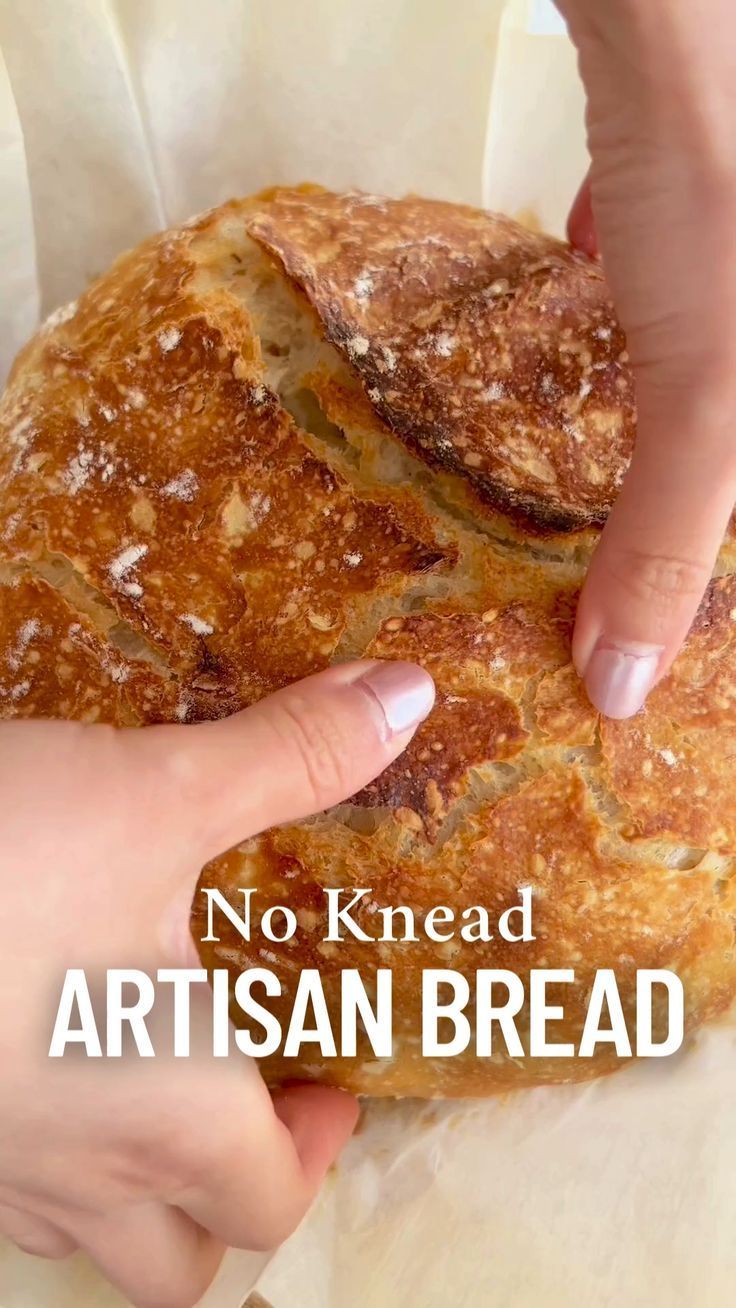
Yeast Artisan Bread
Learn to bake a crusty, chewy yeast artisan bread with minimal kneading and a Dutch oven. Perfect for beginners.
🧂 Ingredients
- 3 cups (390g) bread flour
- 1 1/2 teaspoons (5g) instant yeast
- 1 1/2 teaspoons (9g) fine sea salt
- 1 1/2 cups (355ml) lukewarm water (about 105°F/40°C)
📋 Instructions
- 1Mix the dough — In a large bowl, whisk together flour, yeast, and salt. Add lukewarm water and stir with a wooden spoon until a shaggy dough forms and no dry flour remains. Cover the bowl with plastic wrap or a damp towel.
- 2First fermentation — Let the dough rest at room temperature (about 70°F/21°C) for 12-18 hours. The dough is ready when it's dotted with bubbles and has doubled in size. This slow fermentation develops deep flavor.
- 3Shape the dough — Turn the dough out onto a heavily floured surface. It will be sticky; use a bench scraper to fold it over itself a few times to form a rough ball. Place it seam-side down on a piece of parchment paper.
- 4Second rise — Cover the dough with the damp towel and let it rise for 1-2 hours, until it's puffy and nearly doubled. Meanwhile, place your Dutch oven in the oven and preheat to 450°F (230°C) for at least 30 minutes.
- 5Score the dough — Just before baking, use a sharp knife or lame to score the top of the dough with a few slashes. This allows steam to escape and controls where the bread expands.
- 6Bake covered — Carefully remove the hot Dutch oven from the oven. Using the parchment paper, lift the dough and lower it into the pot. Cover with the lid and bake at 450°F (230°C) for 30 minutes.
- 7Bake uncovered — Remove the lid and continue baking for 15-20 minutes, until the crust is deep golden brown and the internal temperature reaches 205-210°F (96-99°C) on an instant-read thermometer.
- 8Cool completely — Transfer the bread to a wire rack and let it cool for at least 1 hour before slicing. This allows the crumb to set; cutting too early will result in a gummy texture.

Liam covers personal finance and investing for beginners, with a focus on behavioral psychology and avoiding common money traps. He writes from the perspective of a self-taught enthusiast.