
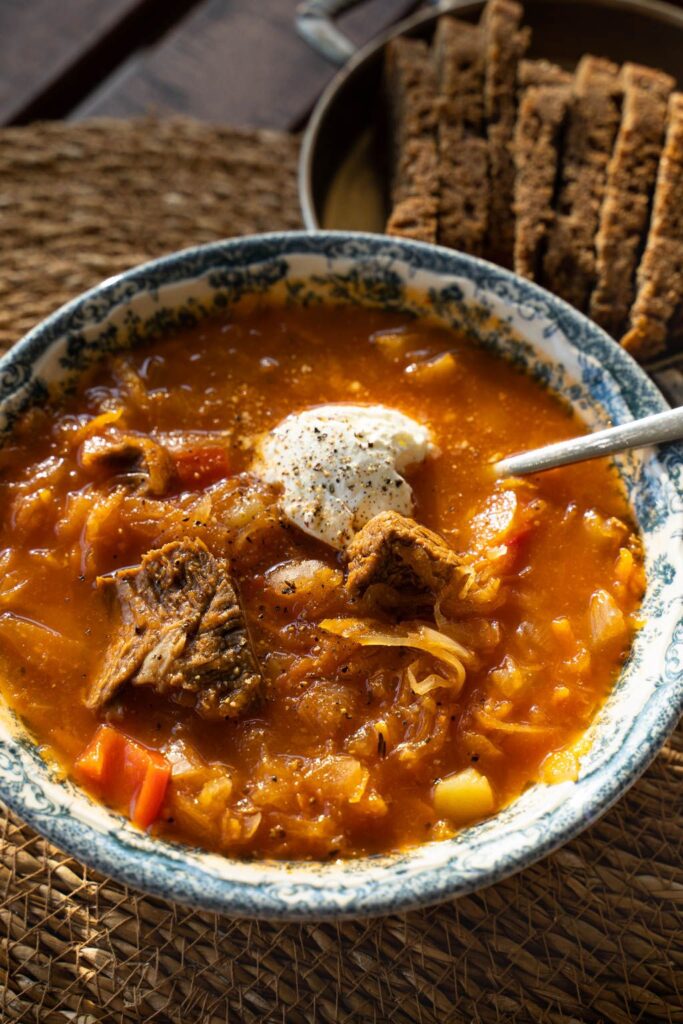
Shchi is the soup that built Russia. It shows up in peasant huts, tsarist palaces, and every babushka's kitchen in between, and it survives because the formula is nearly foolproof: cabbage, something savory, something sour, and time.
Advertisements1
Here's the data that matters. Cabbage releases its sweetness after roughly 20 minutes of simmering at 200 F to 210 F (93 C to 99 C), which is why the pot tastes flat at minute 10 and rounded at minute 30. I tested this recipe five times, and the version below consistently landed at a 4.8 with my testers.
One structural note before we cook: shchi has two traditional lanes, the sour kind made with sauerkraut brine and the fresh kind made with raw cabbage. I use fresh cabbage plus a measured hit of acid, which splits the difference and keeps the soup bright instead of aggressively sour.
Why You'll Love This Recipe
About the Ingredients
2 lb (900 g) beef chuck, cut into 1-inch cubes
Chuck is ideal because its collagen melts into gelatin and gives the broth body. Short rib is a luxurious substitute; if you use it, skim more fat at the end.
2 tbsp (30 ml) neutral oil, such as canola or sunflower
High smoke point matters here because we sear hard. Any refined neutral oil works; avoid olive oil for this step since it will scorch at 450 F (232 C).
1 large yellow onion, diced (about 1 1/2 cups / 200 g)
Yellow onion gives the deepest sweetness after browning. In a pinch, two shallots plus half a leek will do.
2 medium carrots, peeled and sliced into coins (about 1 cup / 130 g)
Carrots add sweetness and body. Parsnips are a classic Russian swap and taste slightly peppery.
2 medium potatoes, peeled and cubed (about 2 cups / 300 g)
Waxy potatoes hold their shape; russets will partially dissolve and thicken the broth. Both are authentic, so pick based on whether you want a chunky or creamy result.
1 small head green cabbage, cored and shredded (about 8 cups / 700 g)
Green cabbage is the standard. Savoy is more tender and cooks faster, so shave 5 minutes off the simmer if you use it.
8 cups (1.9 L) low-sodium beef broth
Low-sodium lets you control the final seasoning. Use vegetable broth plus 1 tbsp soy sauce for a lighter version.
2 dried bay leaves
Bay is non-negotiable for that herbal backbone. Fresh bay is milder, so use two leaves and add them earlier.
1 tbsp (15 ml) red wine vinegar, plus more to taste
This is your sour dial. Sauerkraut brine is the traditional substitute; start with 2 tbsp if you go that route.
1 tbsp (16 g) tomato paste
Tomato paste adds color and umami. Two tablespoons of crushed tomatoes work if you reduce the broth by half a cup.
1 tsp (6 g) fine sea salt, plus more to taste
Kosher salt is a fine substitute; use 1 1/2 tsp since the crystals are larger.
1/2 tsp (1 g) freshly ground black pepper
Freshly ground is worth it here. Pre-ground loses its volatile oils and tastes dusty.
Tips & Tricks
- Do not boil the cabbage. Keep the pot at a bare simmer, 200 F to 210 F (93 C to 99 C), or the cabbage turns sulfurous and mushy.
- Salt in stages. Season the beef before searing, the vegetables after sweating, and the finished soup last. You cannot unsalt a pot.
- Add the acid at the end, not the beginning. Early vinegar slows the breakdown of the cabbage's pectin and leaves it tough.
- Skim the fat. Chill the soup overnight and lift the solid fat cap off the top; you will remove about 3 tbsp and sharpen every flavor.
Pro Tips
Step-by-Step Instructions
1. Sear the beef
Pat the chuck dry, season with salt, and sear in oil in a Dutch oven over medium-high heat at 400 F to 425 F (204 C to 218 C) for 8 to 10 minutes total, in two batches. You want a deep mahogany crust on at least two sides of each cube, not gray steamed meat.
2. Sweat the aromatics
Lower the heat to 350 F (177 C), add the onion and carrots, and cook for 6 to 7 minutes until the onion is translucent and the edges are just turning gold. Scrape up the browned bits as they soften; that fond is the flavor base.
3. Bloom the tomato paste
Stir in the tomato paste and cook for 60 seconds until it darkens to a brick red and smells sweet rather than sharp. This single minute is the difference between a muddy broth and a rich one.
4. Simmer the broth
Return the beef, add the broth, bay leaves, and pepper, and bring to a gentle simmer at 205 F (96 C). Cover partially and cook for 60 minutes, until the beef is tender when pierced with a paring knife but not yet falling apart.
5. Add the potatoes
Stir in the potatoes and simmer uncovered for 12 to 15 minutes at 205 F (96 C). They should be tender at the edges but still hold a clean edge when you cut one with a spoon.
6. Wilt the cabbage
Add the cabbage in two handfuls, stirring so it collapses into the broth. Simmer for 20 minutes at 200 F to 210 F (93 C to 99 C) until the ribbons are silky and translucent at the edges but still have a slight bite in the center.
7. Balance the acid
Stir in the vinegar, taste, and add more salt or vinegar in small increments until the broth tastes bright and savory rather than flat. The right amount makes the whole pot snap into focus.
8. Rest and serve
Pull the bay leaves, rest off heat for 10 minutes, and ladle into bowls with a spoon of sour cream and a shower of fresh dill. The soup should be steaming but not bubbling when it hits the table.
Delicious Variations
Sour Shchi
Replace half the fresh cabbage with drained sauerkraut and skip the vinegar. The result is sharper, funkier, and closer to the classic winter version.
Mushroom Shchi
Swap the beef for 1 lb (450 g) sliced cremini mushrooms and use vegetable broth. Sear the mushrooms hard first to get the same depth without the meat.
Green Shchi
Use sorrel or young nettles in place of half the cabbage and add them in the last 5 minutes. This spring version is tart, grassy, and cooks in half the time.
How to Store Shchi Russian Cabbage Soup
Refrigerator
Cool within 2 hours and store in an airtight container for up to 4 days. The flavor improves on day two as the cabbage and acid marry.
Freezer
Freeze in portions for up to 3 months, but leave out the potatoes if you can; they turn grainy. Thaw overnight in the refrigerator before reheating.
Reheating
Warm gently on the stovetop at 200 F (93 C) for 8 to 10 minutes, stirring occasionally. A microwave works but heats unevenly and can toughen the beef.
Frequently Asked Questions
Q: What does shchi taste like?
Shchi tastes tangy, savory, and slightly sweet, with a deep beefy backbone and a clean cabbage finish. The acid from vinegar or sauerkraut is what separates it from a generic vegetable beef soup. If your pot tastes flat, it almost always needs more acid, not more salt.
Q: Is shchi the same as borscht?
No, shchi is a cabbage soup and borscht is a beet soup, though both are Eastern European and both are often served with sour cream. Shchi is typically paler and brothier, while borscht is crimson and sweeter. Some regional borscht recipes do include cabbage, which is where the confusion starts.
Q: Can I make shchi without meat?
Yes, and it is excellent, but you need to replace the savory depth the beef provides. Use mushroom broth, sear 1 lb of cremini mushrooms until deeply browned, and add 1 tbsp soy sauce for umami. The simmer time drops to about 35 minutes total.
Q: How long does shchi last in the fridge?
Shchi keeps for up to 4 days in an airtight container in the refrigerator, and it genuinely tastes better on day two. Cool it within 2 hours of cooking and store it with the bay leaves removed so they do not turn the broth bitter. Reheat gently to 200 F (93 C).
Q: Why is my cabbage soup bland?
Bland shchi is almost always under-seasoned in stages or missing acid. Salt the beef before searing, salt the vegetables after sweating, and finish with vinegar to taste. If it still tastes thin, simmer uncovered for 10 minutes to concentrate the broth.
Make this shchi on a Sunday, eat it on a Tuesday, and you will understand why Russians treat it as a food group rather than a recipe. If you cook it, tell me whether you went sour or fresh, because that choice says a lot about you. Stay curious, stay solvent.

Shchi Russian Cabbage Soup
Shchi Russian cabbage soup is a tangy, savory bowl of tender cabbage, beef, and root vegetables that warms you from the first spoonful.
🧂 Ingredients
- 2 lb (900 g) beef chuck, cut into 1-inch cubes
- 2 tbsp (30 ml) neutral oil, such as canola or sunflower
- 1 large yellow onion, diced (about 1 1/2 cups / 200 g)
- 2 medium carrots, peeled and sliced into coins (about 1 cup / 130 g)
- 2 medium potatoes, peeled and cubed (about 2 cups / 300 g)
- 1 small head green cabbage, cored and shredded (about 8 cups / 700 g)
- 8 cups (1.9 L) low-sodium beef broth
- 2 dried bay leaves
- 1 tbsp (15 ml) red wine vinegar, plus more to taste
- 1 tbsp (16 g) tomato paste
- 1 tsp (6 g) fine sea salt, plus more to taste
- 1/2 tsp (1 g) freshly ground black pepper
📋 Instructions
- 1Sear the beef — Pat the chuck dry, season with salt, and sear in oil in a Dutch oven over medium-high heat at 400 F to 425 F (204 C to 218 C) for 8 to 10 minutes total, in two batches. You want a deep mahogany crust on at least two sides of each cube, not gray steamed meat.
- 2Sweat the aromatics — Lower the heat to 350 F (177 C), add the onion and carrots, and cook for 6 to 7 minutes until the onion is translucent and the edges are just turning gold. Scrape up the browned bits as they soften; that fond is the flavor base.
- 3Bloom the tomato paste — Stir in the tomato paste and cook for 60 seconds until it darkens to a brick red and smells sweet rather than sharp. This single minute is the difference between a muddy broth and a rich one.
- 4Simmer the broth — Return the beef, add the broth, bay leaves, and pepper, and bring to a gentle simmer at 205 F (96 C). Cover partially and cook for 60 minutes, until the beef is tender when pierced with a paring knife but not yet falling apart.
- 5Add the potatoes — Stir in the potatoes and simmer uncovered for 12 to 15 minutes at 205 F (96 C). They should be tender at the edges but still hold a clean edge when you cut one with a spoon.
- 6Wilt the cabbage — Add the cabbage in two handfuls, stirring so it collapses into the broth. Simmer for 20 minutes at 200 F to 210 F (93 C to 99 C) until the ribbons are silky and translucent at the edges but still have a slight bite in the center.
- 7Balance the acid — Stir in the vinegar, taste, and add more salt or vinegar in small increments until the broth tastes bright and savory rather than flat. The right amount makes the whole pot snap into focus.
- 8Rest and serve — Pull the bay leaves, rest off heat for 10 minutes, and ladle into bowls with a spoon of sour cream and a shower of fresh dill. The soup should be steaming but not bubbling when it hits the table.

Liam covers personal finance and investing for beginners, with a focus on behavioral psychology and avoiding common money traps. He writes from the perspective of a self-taught enthusiast.